
Ever thought a simple chart could be your secret weapon in the kitchen? It’s like having a key that opens the door to perfect measurements every time you cook. This friendly guide breaks down teaspoons, cups, grams, and ounces so you can mix your ingredients just right. With accurate amounts at your fingertips, every recipe feels like a little masterpiece. Dive in and let this chart add a bit of extra fun and ease to your cooking adventures.
Instant Ingredient Conversion Chart Overview
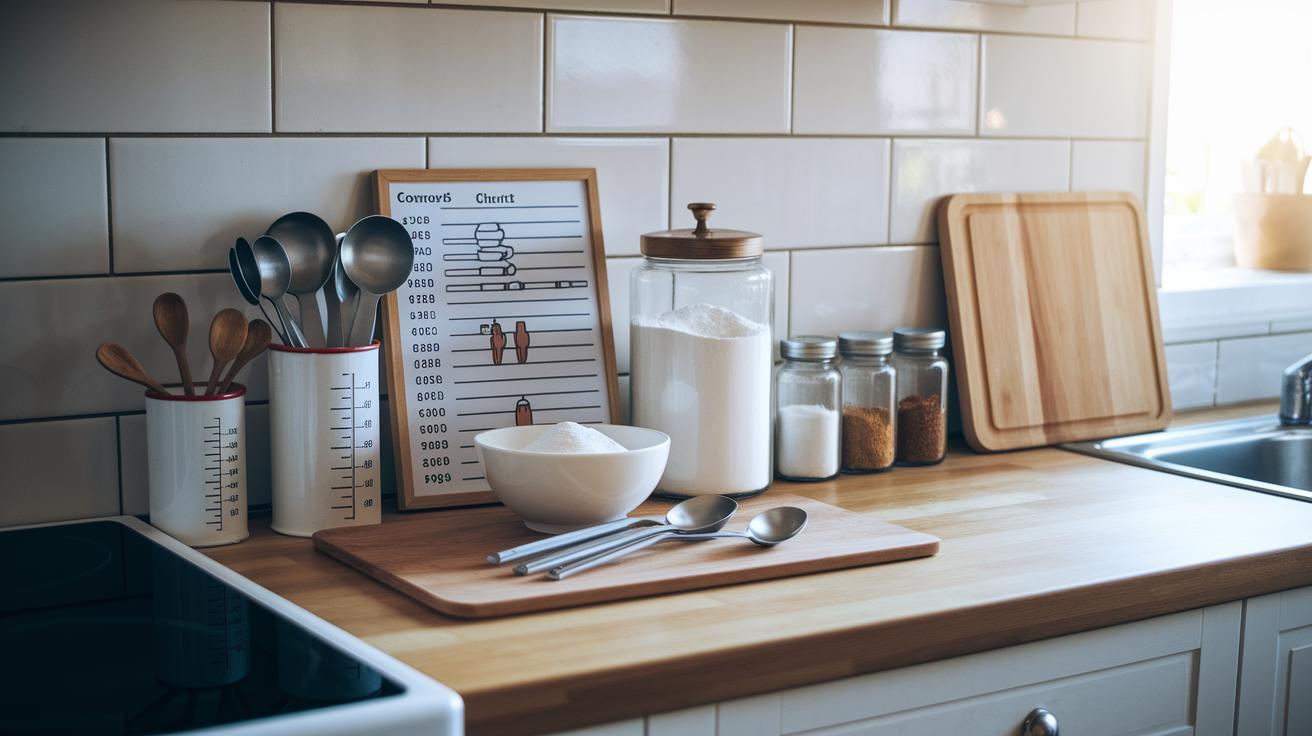
This handy chart is your go-to guide for all your kitchen measurements. It covers everything from teaspoons and tablespoons to cups, fluid ounces, grams, and ounces. You'll find it super useful whether you're whipping up a batch of cookies or trying a new recipe.
It lists common ingredients like all-purpose flour, granulated sugar, spices, and dry mixes. For busy bakers and everyday cooks, knowing these conversions makes switching between recipes a piece of cake. Ever tried the spoon and level method for dry ingredients? It ensures every measure is just right.
Here's a fun fact: "Before he became a famous chemist, a well-known scientist once used makeshift lab gear from his kitchen. This shows that getting your measurements right is a big deal in any craft."
These baselines keep things simple. Remember, one tablespoon equals 3 teaspoons, and one cup holds 8 fluid ounces (half a pint). For perfect baking, note that one cup of all-purpose flour weighs 125 grams (about 4.4 ounces) and one packet of dry yeast is the same as 2¼ teaspoons (roughly ¼ ounce). With these tips, you'll nail that perfect texture and flavor every time you cook or bake.
Dry Ingredient Conversion Chart for Baking
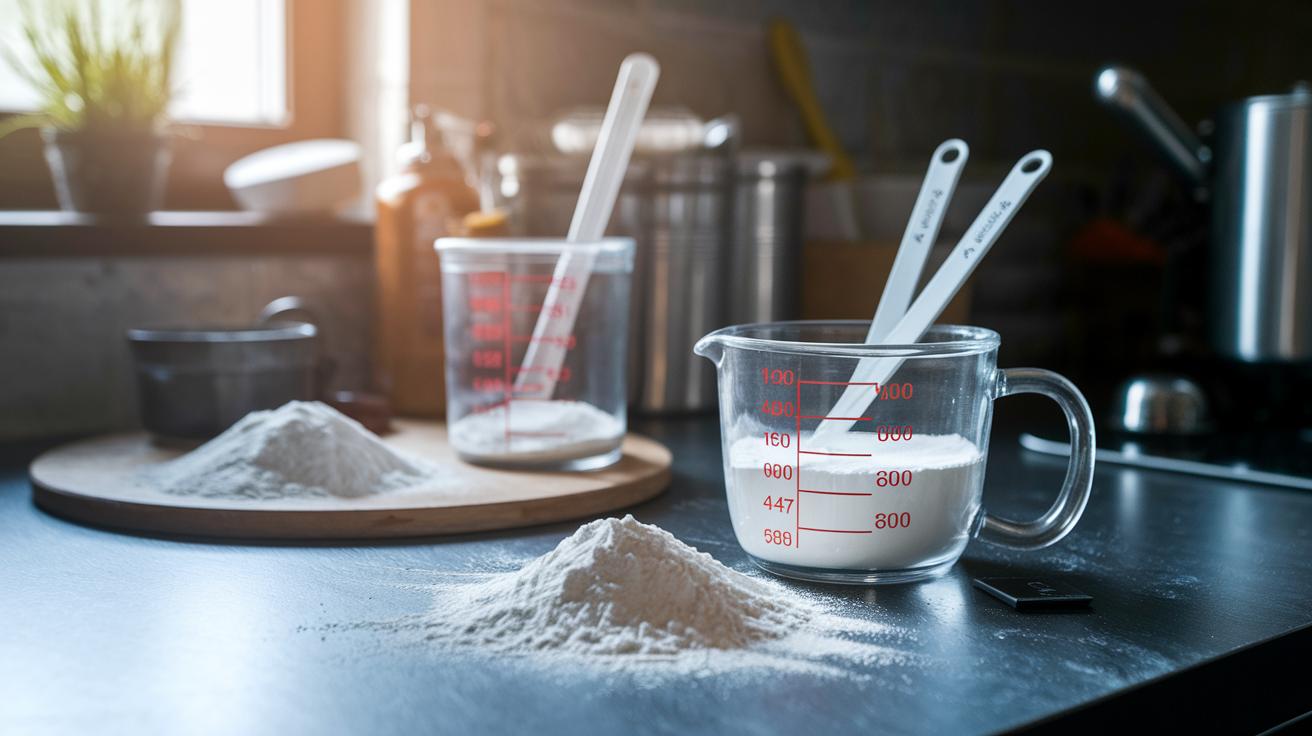
When you're baking, getting your dry measurements just right makes a world of difference. Try using the spoon and level technique, it’s a simple trick that helps you measure each ingredient exactly. For staples like flour, oats, cocoa powder, and confectioners' sugar, simply spoon the ingredient into your measuring cup and then run the back of a knife across the top to smooth it out. This tip keeps you from accidentally adding up to 50% extra.
Granulated sugar needs a slightly different touch. Fill your cup until it’s overflowing, then run your knife over the top. This method keeps the sugar's natural density, which helps your baked treats brown evenly and hold their shape. As for confectioners' sugar, you can sift it before or after measuring, depending on what your recipe calls for. This simple approach not only makes your measurements more consistent but also makes it easier to scale your recipes for any size batch. Every time you level off your ingredients, you're steering clear of potential kitchen mishaps.
| Ingredient | Volume (1 cup) | Weight (g) |
|---|---|---|
| All-purpose flour | 1 cup | 125 g |
| Granulated sugar | 1 cup | 200 g |
| Packed brown sugar | 1 cup | 220 g |
| Cocoa powder | 1 cup | 100 g |
| Rolled oats | 1 cup | 90 g |
Liquid Ingredient Conversion Chart
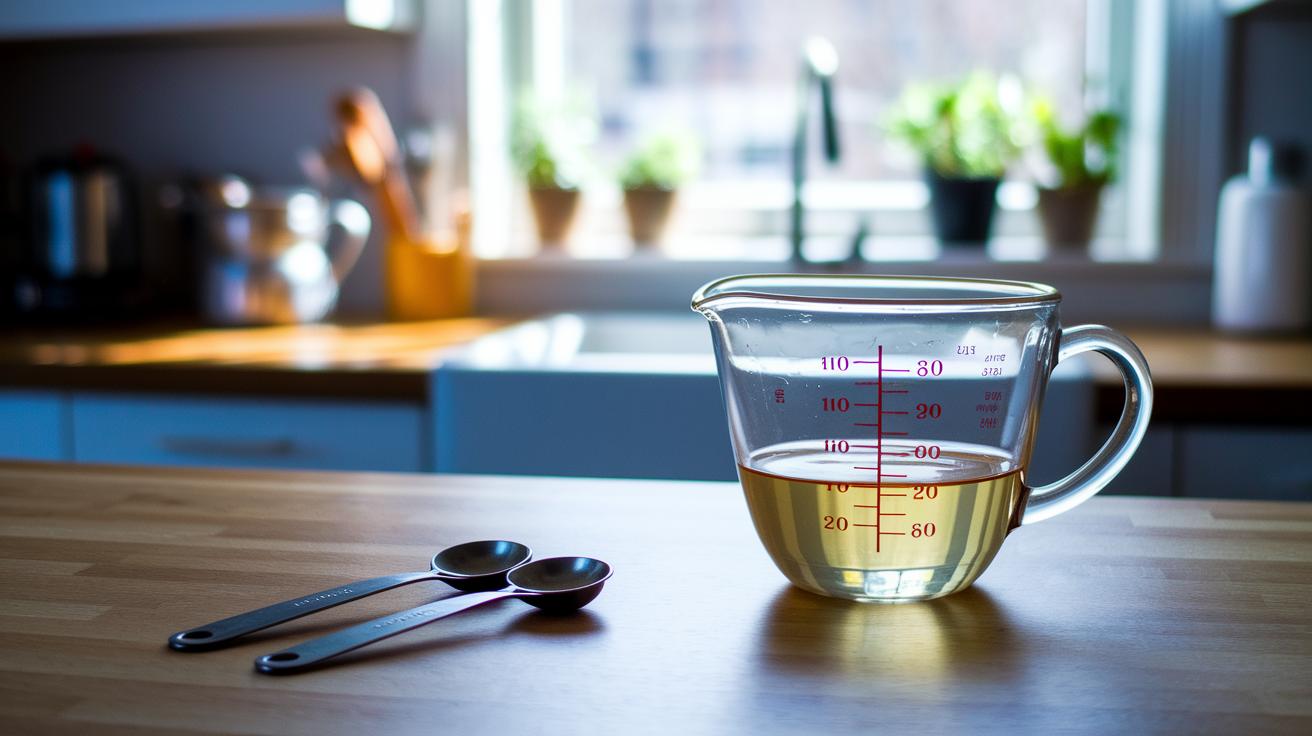
When you’re in the kitchen, getting liquid measurements just right is the secret to success. Use a liquid measuring cup and check the level at your eye so that each drop is exact. Hold the cup steady and make sure the liquid's surface, or meniscus (the curved part you see), lines up perfectly with the mark. This little trick can really change the final taste of your dish.
Remember, one cup is equal to 8 fl oz, ½ pint, or about 240 mL, which for water is roughly 240 g. This rule works for everyday ingredients like water, milk, and oil.
For thicker or semi-liquid items like sour cream, yogurt, or applesauce, a dry measuring cup is best. Scoop the ingredient with a spoon and then level it off before transferring it with a rubber spatula. This method cuts down on waste and helps keep your recipes consistent.
Keep these tips in mind, and you can confidently flip between metric and imperial measurements whether you're baking a light cake or simmering a hearty soup. Every drop counts when you’re aiming for that perfect burst of flavor and texture.
Ensuring Measurement Accuracy with Ingredient Conversion Chart
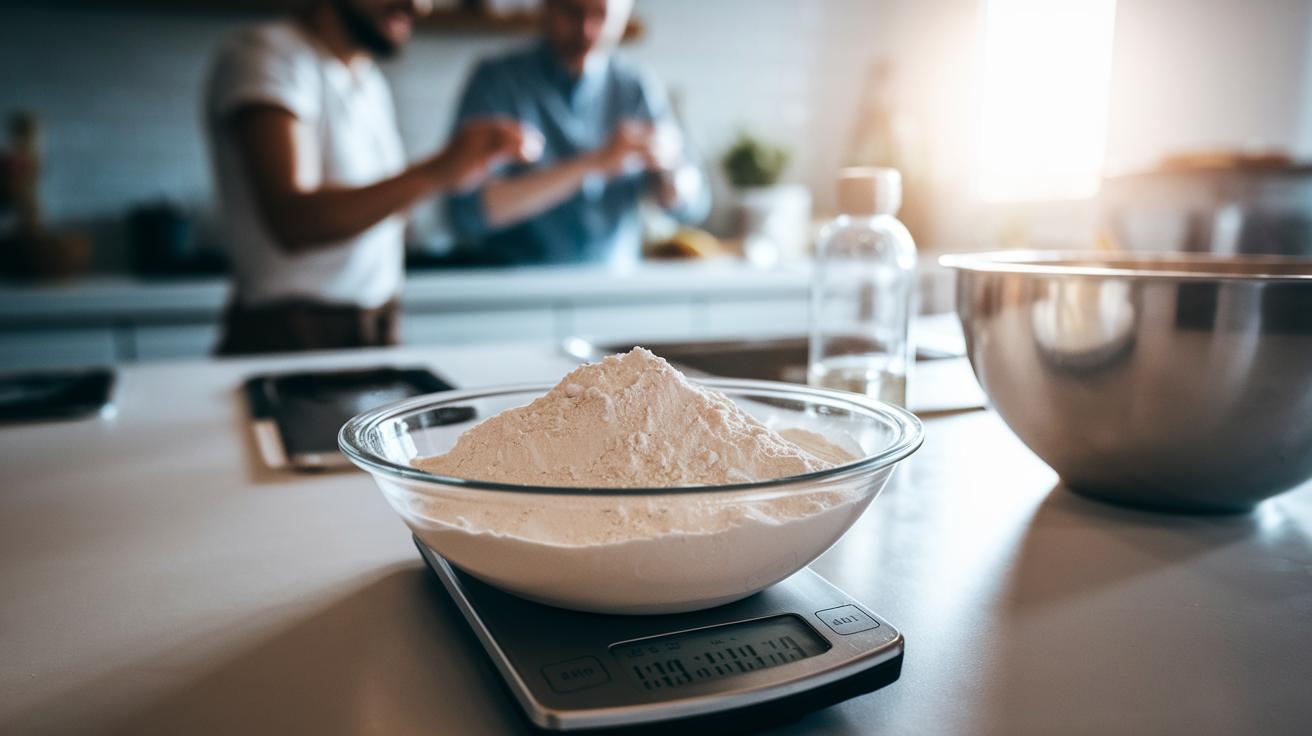
When you use a kitchen scale, you get a trustworthy way to measure your ingredients down to the tiniest bit. Digital scales make it easier too, reducing mistakes compared to old-style analog ones.
This method takes out the guesswork often found with cup measurements, which can sometimes give you surprising textures and flavors. Ever notice how a simple tweak can change a dish entirely? Imagine using a steady ratio of 1 g of flour for every mL of liquid , it helps you adjust your recipes without losing balance.
That handy ratio works great when you're doubling a loaf of bread or shrinking a cake recipe to a smaller batch. It’s all about capturing the real density of each ingredient, whether you're dealing with smooth flours or something a bit coarser.
Plus, a digital measurement table gives you quick conversions between metric and imperial units. This makes it a breeze to follow recipes from all around the world. And with a kitchen scale and weight converter tools in your arsenal, you can be sure your baked goodies and savory meals have just the right texture and flavor every time.
Printable & Digital Ingredient Conversion Chart Tools
Have you ever craved a simple way to convert your cooking measurements without any fuss? Online, you'll find plenty of tools that make swapping between teaspoons, cups, grams, and ounces a breeze. Many websites let you download a neat two-page PDF that you can print out or keep on your device for quick reference. Whether you're baking a cake or simmering a hearty stew, these guides help turn tricky conversions into straightforward steps.
And there's more! Digital calculators and mobile apps let you enter your own amounts and instantly see the metric and imperial equivalents. They even let you save your favorite ingredient profiles, so switching between recipes is as easy as pie. Whether you trust a web-based tool or a smartphone app, these handy resources fit perfectly with your busy day. They ensure each conversion is spot-on, saving you time and lifting the stress out of cooking. Enjoy effortless, delicious cooking every time!
Final Words
In the action, we traveled through a quick-reference ingredient conversion chart, breaking down measurements from teaspoons to cups, grams to ounces. We explained both liquid and dry ingredient techniques with details from standard conversions to proper spoon-and-level methods.
We also looked at tools for ensuring precision, like kitchen scales and ratio formulas, and touched on digital resources such as printable PDFs and handy mobile apps. Embrace this ingredient conversion chart to boost confidence and creativity in your home cooking adventures. Enjoy every moment in the kitchen!
FAQ
What is a printable cooking conversion chart PDF?
A printable cooking conversion chart PDF provides a handy two-page reference listing key measurements like teaspoons to cups and grams to ounces, making it simple to swap between units in any recipe.
What does an ingredient conversion chart to cups show?
An ingredient conversion chart to cups explains that 1 cup equals 8 fluid ounces or 240 milliliters, with adjustments needed for different ingredients based on their density and packing methods.
What information does a food ingredient conversion chart to grams offer?
A food ingredient conversion chart to grams shows how to translate cup measurements into metric weights, guiding you to accurately convert both dry and liquid ingredients for consistent cooking results.
What is the conversion for 1 cup of flour in grams, and is it 100 grams?
The conversion for 1 cup of all-purpose flour is typically about 125 grams, not 100 grams. Spoon and level methods help achieve these consistent and accurate measurements.
How many grams are in 1 cup of granulated sugar?
One cup of granulated sugar weighs roughly 200 grams, which aligns with standard conversion charts to ensure the right balance in both baking and cooking.
What does a cooking conversion calculator do?
A cooking conversion calculator lets you input custom amounts and instantly convert between metric and imperial units, reducing guesswork and streamlining recipe adjustments.
How do you convert recipe measurements effectively?
Converting recipe measurements effectively means using detailed charts or digital tools that provide cup, gram, and ounce equivalencies to maintain proper ingredient balance.
How much are 4 ounces of dry ingredients in grams?
Four ounces of dry ingredients convert to roughly 113 grams, though exact weight may vary depending on the ingredient’s density and how it’s measured.